+92 320 8688688
Head office: 233/8, Sm Building , Near Nauras Churangi,Karachi

Many cities in India restrict or prohibit plastic bags completely and just allow to use biodegradable bags instead which has been fully supported by environmentalists. However, it can’t be denied the fact that not everyone benefits from this initiative. Customers are not only anxious of using plastic bags in supermarkets, stores, etc, as they have to pay a great deal of money for each plastic bag, they also often forget to bring their own bags to hold things they buy. However, we cannot deny the convenience of plastic bags (especially biodegradable bags).

According to the Ministry of Finance, many countries around the world are imposing heavy environment taxes on plastic bags, such as the UK or Ireland, with the tax of 15 cents per bag (equivalent to 4,500 VND per bag); Hong Kong $ 0.05 / bag (equivalent to 1,050 VND / bag), Estonia plans to impose tax by 2 cents per bag (equivalent to 3,000 VND / bag), in Spain 5-50 cents / bag. Others prohibit manufacturing, selling and using of thin plastic bags, such as China prohibits plastic bags with thickness less than 0.025 milliliters, or Spain bans producing bags with thick films of less than 50 microns, impose tax by 5-10 cent for biodegradable bags (this is a big barrier for biodegradable bag suppliers).

In Viet Nam, the environment tax applied to plastic bags is 40,000 VND per kilogram, equivalent to 200-400 VND per bag (each kilogram may be equivalent to 100-200 bags), but biodegradable bag suppliers don’t sell this kind of product in Viet Nam because of extremely expensive price as well as Vietnamese consumer behaviour.

The Ministry of Finance said that the tax is at a very low level compared to other countries, and has not had a major impact on the restriction of plastic bags production and use. Therefore, the ministry proposed to adjust the environment tax for plastic bags to 40,000-200,000 VND / kg (the minimum level is equal to the current tax, the maximum is four times the maximum level in the current tariff structure).

According to environmental experts, the imposition of environment tax on plastic bags at the rate of 40,000 VND / kg has not yet significantly impacted the green consumer behaviour, the consumption of plastic bags on the market accounts for 80%.

According to the Vietnam Plastics Association, since the government imposes environment tax on plastic bags, we just has about 30 new enterprises filing to be recognized as environmentally friendly bag manufacturers (surely including biodegradable bag suppliers) , accounting for 20% market share, although there are nearly 400 units of plastic bags production. The association also noted that most establishments do not participate in the production chain of biodegradable plastic bags because of their small business size and low revenue while the procedure of applying for environmentally friendly packaging certificate is not easy and very costly.

On March 28, 2018, the US Department of Commerce announced the initiation of anti-dumping duty (AD) and countervailing duty (CVD) investigations on imports of laminated woven sacks made of one or more plies of fabric consisting of woven polypropylene strip and/or woven polyethylene strip from the Socialist Republic of Vietnam (Vietnam). The US International Trade Commission (ITC) is scheduled to make its preliminary injury determinations on or before April 23, 2018.

The merchandises covered by these investigations are laminated woven sacks made of one or more plies of fabric consisting of woven polypropylene strip and/or woven polyethylene strip with HS codes namely 6305.33.0040, 3917.39.0050, 3921.90.1100, 3921.90.1500, 3923.21.0080, 3923.21.0095, 3923.29.0000, 4601.99.0500, 4601.99.9000, 4602.90.0000 and 5903.90.2500. These products are not in AAA’s current focus or in AAA’s expansion plan. Additionally, our key export markets are EU and Japan. Although we plan to expand exports to the US market in near future, the expected export items do not fall into the investigated product list. Hence, we can confirm that there is no impact from these investigations on AAA’s business in 2017.

Established as a small-scale business, after only 15 years of development, currently AAA’s total capacity of seven factories has reached 8000 tons/month, making us the No. 1 in Southeast Asia for plastic packaging manufacturing. However, we will not stop there, our objective for the coming periods is to maintain growing momentum, achieving 1 billion US dollars revenues by 2025, expanding environmental friendly products, creating sustainability for society and enhancing value for shareholders.

In March 2018, AAA was granted the Certificate of stock issuance registration and in April AAA has been completing the procedures to increase contributed capital for investing in laminated packaging and high-tech injection molding factory. These products are expected to earn higher profit margins than current ones, contributing to sales and profit growth of AAA in coming years. Considering the potential of upcoming projects, in 2018 AAA confidently set a high growth target with sales of VND6,000 billion and after-tax profit of VND330 billion, up 47% and 25.5% respectively compared to 2017’s results.

In trading sections of the 3th and 4th of April, AAA’s price jumped back after falling sharply for a series of six sessions. The stock price increased by over 17% and closed on the 4th of April at VND26,500. The rebound of the stock price showed a more optimistic view of investors on such undervalued stock having a good fundamental story.

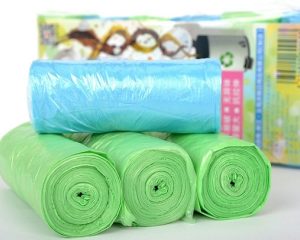
Let’s unveil the little mystery behind the oh-so common item that we all consuming every day without ever wonder for a split second of what my biodegradable trash bag made of and what differences does it make for our planet?

Biodegradable trash bag story

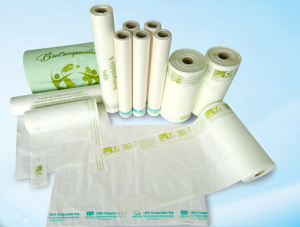
An Phat Biodegradable bag
 

Taking garbage to the dump, have you ever rolled your eyes over what printed on your let say your kitchen trash bags roll label, you may have noticed abundance of name tags appearing over the last few years such as biodegradable trash bag, ecofriendly trash bag or environmentally friendly trash bag,… 


Let’s unveil the little mystery behind the oh-so common item that we all consuming every day without ever wonder for a split second of what my biodegradable trash bag made of and what differences does it make for our planet?
 

Ubiquitously found around us, which has become a seemingly essential part of our daily life, biodegradable trash bag is made from similar petrochemical-based materials to conventional plastic, only with compounds added that cause them to disintegrate slowly but surely.


Add: Head office: 143/8, An Binh

Str, Ward 6, Distric 5, HCM City.

Factory: Road 8, Bien Hoa

Industrial Park Zone 1, Bien Hoa

City, Dong Nai Province
Email: newsunplast@gmail.com
Tel: (+84) - 2513.832.965

Fax: (+84) - 2513.832.968


Main products

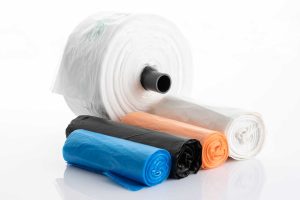
Garbage Flat bag on rolls
Drawstring Bin Liners for Interleaved &

Perforated figures
Star seal garbage bags, S type figures

pedal bin liners

Copyright © 2023 by SM Plastic. All rights reserved